Asphalt & Pothole Repair in Wichita, KS
Fixing the cracks, potholes, and worn patches in your driveway or lot before Kansas winters turn them into a rebuild — crack filling, pothole repair, patching, and honest advice on when a repair is enough and when it is not.
Call (316) 368-2270 for a Free Estimate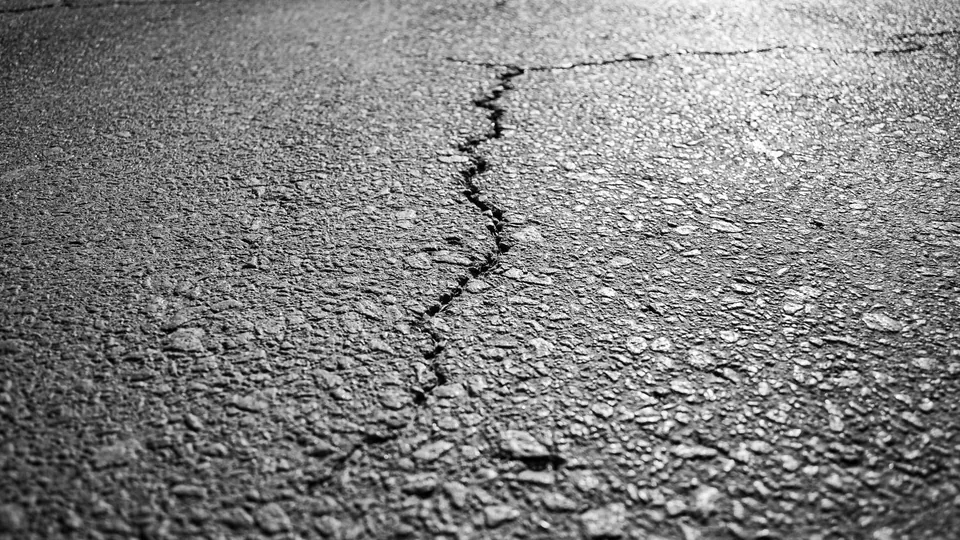
Most asphalt failures start small and cheap to fix, and get expensive only because they were left alone. A hairline crack lets water into the surface; a Kansas freeze turns that water to ice, the ice expands, and the crack widens; water gets in deeper, reaches the clay base, and once the base is wet and moving the surface above it breaks apart. The whole progression is water plus cold plus time, and repair is how you interrupt it while it is still a repair and not a replacement.
That is why this is a page in its own right and not a footnote under installation. Around here the smartest money in asphalt is usually spent on maintenance — filling a crack before winter, patching a pothole before it spreads, catching a soft spot before it becomes a hole. The driveway that just needs its cracks sealed and two potholes patched is the job most homeowners actually need, and it deserves a real repair rather than a quick fill.
Crack Filling — the Cheapest Fix There Is
A crack is a doorway for water, and on this clay, water in the base is the beginning of every serious problem. Filling cracks while they are narrow is the single most cost-effective thing you can do for an asphalt surface, because it keeps moisture out of the layers below before the freeze-thaw cycle can widen the opening. The rule of thumb is to fill a crack once it is about a quarter inch wide, and to get ahead of it before winter regardless — a crack that is holding water when the first hard freeze arrives is a crack that will be noticeably bigger by spring.
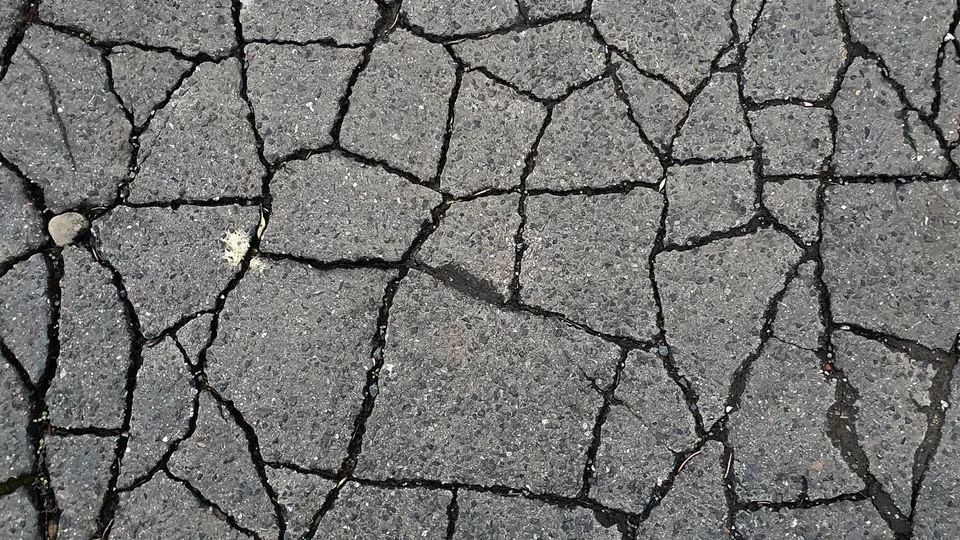
Not every crack is the same, though, and part of the job is reading which is which. A few isolated surface cracks are routine maintenance. A web of interconnected cracks that looks like the back of an alligator is a different message entirely — that pattern usually means the base underneath has already failed, and filling it is a stopgap rather than a fix. We tell you which one you are looking at instead of selling crack filler for a problem that is deeper than the surface.
Pothole Repair in Wichita: Why Potholes Form Here
Potholes are a freeze-thaw story from start to finish, which is why Wichita gets a fresh crop of them every late winter. Water works down through a crack into the base, freezes, and expands, lifting the surface; when it thaws the ground settles back and leaves a void; traffic then pounds the unsupported surface until it collapses into a hole. A pothole is really the visible end of a problem that has been building underground since the first crack let water in.
A proper pothole repair deals with the cause, not just the hole. The failed material and any wet, unstable base are cut out, the hole is squared up and cleaned, fresh base and hot-mix asphalt go in, and the patch is compacted so it bonds and carries traffic instead of popping out in a season. A quick throw-and-go cold patch might get you through a few weeks, but on clay that has been moving, a repair that does not address the base underneath is a repair you will be doing again.
Patching, Soft Spots, and Alligator Cracking
Between a single pothole and a full replacement sits patching — cutting out a defined area of failed surface and rebuilding it. This is the right tool for a soft spot that flexes underfoot, a section that has crumbled at the apron or the edge, or an area of early alligator cracking that has not yet spread across the whole driveway. Catching a failing patch while it is contained keeps the damage from migrating into sound asphalt around it.
Alligator cracking is the warning sign to take seriously. When the surface breaks into a tight interconnected pattern, the base below has lost its ability to support the load, and the cause is almost always water that reached the clay and stayed there. A small area can be cut out and rebuilt. Once it covers much of the surface, though, patching is chasing a problem that has already won, and the honest conversation shifts to resurfacing or replacement — which is a call we make with you on site, not a default upsell.
When Repair Is Enough — and When It Isn't
The deciding question is always the base. If the base is still sound and the trouble is on top — cracks, a pothole or two, a worn patch, surface oxidation — repair buys years for a fraction of the cost of tearing anything out, and it is clearly the right move. If the base has failed, no amount of surface repair lasts, because the ground under the asphalt is the thing that is broken.
The tell is whether the surface is moving. A drive with a few cracks and a firm feel underfoot has a surface problem and is a repair. A drive that has spidered into widespread alligatoring, sunk in spots, or gone soft has a base problem, and the money is better spent on a resurface or a rebuild than on repeated patches. We would rather tell you a repair will hold than sell you a replacement you do not need — and we would rather be straight that a rebuild is coming than take your money for patches that will not last the year.
Reading the Damage: What Each Pattern Means
Walk the surface and the damage will tell you what the repair is. Thin isolated cracks, or a single line running the length of a driveway where two paving lifts met, are normal aging, thermal movement, or a joint doing what a joint does. Clean them and fill them. Block cracking is different: larger rectangular sections divided by cracks into something like a grid, usually across a wide area. That pattern means the asphalt has aged and shrunk, losing flexibility to oxidation rather than to load. Filling still helps, and it is often the last comfortable moment to consider resurfacing instead of replacing.
Raveling is the surface going gritty and shedding aggregate, with loose stone collecting along the edges and in the gutter. The binder holding the aggregate together has oxidized and let go. On a surface that is otherwise sound this is a sealing and maintenance conversation; once it is advanced and widespread it becomes a resurfacing conversation. Edge cracking and crumbling edges show up along the outer few inches, especially where asphalt meets grass or gravel, because the edge has nothing supporting it laterally and vehicles running off the side accelerate it. Edges can be cut back and rebuilt, and the shoulder built up so it stops happening again.
Depressions that hold water after rain are the pattern that most needs eyes on it. They are either a shallow surface irregularity or a base quietly settling underneath, and from standing height those two look identical while having very different answers. Upheaval, where a section has risen above the surrounding surface, means something under it expanded, usually moisture freezing in the subgrade and sometimes roots; that is a full-depth repair, and the cause has to be dealt with or it returns. Fading from black toward gray is not damage at all. It is oxidation, and it is the point at which sealing starts paying for itself.
What a Proper Crack Fill Actually Involves
We will fill the cracks covers a wide range of quality, so it is worth knowing what the careful version looks like. The crack gets cleaned out first, because dirt, vegetation, and loose material left in the channel mean the filler bonds to the debris instead of to the asphalt, and it pops out. It has to be dry, since sealant applied into a damp crack does not adhere. Wider cracks get routed, cut to a consistent shape, so the sealant has a reservoir to sit in and room to move rather than a thin skin stretched across the top of an irregular gap.
The material matters as much as the preparation. Hot rubberized crack sealant stays flexible through temperature swings and moves with the crack as it opens and closes across a season. Cold pourable fillers have a place on small residential work, but they are not the same product and they do not behave the same way through a Kansas winter. A fill should also not be overfilled: a raised ridge of sealant standing proud of the surface gets caught by plow blades and tires, and it pulls itself back out of the crack it was meant to close.
Timing is the last piece. Fall, before the first hard freeze, is ideal, because you are sealing ahead of the season that does the damage. Spring works too and is usually when people notice. What does not work is filling a crack that is currently holding water, or filling in cold weather when the sealant cannot flow and bond properly. That is the whole reason the window matters, and it is why a crack noticed in September is a much cheaper crack than the same one noticed in April.
Repair Methods, and When Each Is the Right One
Surface patching places material over or into a shallow defect and compacts it. It is fast and inexpensive and it is the right tool where the base underneath is intact. It is the wrong tool for a pothole caused by base failure, which describes most potholes, and that mismatch is exactly why some repairs keep coming back. Cold patch is pre-mixed material that can be placed without heat, and it is genuinely useful in winter to keep a hole from growing and from damaging vehicles until the weather allows a real repair. It is a stopgap by design. Treating cold patch as permanent is how a small full-depth job turns into a large one.
Hot mix patching places and compacts hot asphalt into a prepared area so it bonds and carries traffic, and it is the standard for a repair meant to last, which is why it is working-season work. Full-depth patching goes further: the area is saw-cut to clean square edges, the failed asphalt is removed, and the base beneath it is excavated, corrected, and recompacted before new asphalt goes back in lifts. The square edges matter more than they look like they do. A patch cut to clean vertical faces gives the new material something to compact against, while material feathered into a ragged hole has thin edges that break down almost immediately.
Infrared repair heats the existing asphalt in place, rakes it, blends new material in, and recompacts the whole area, producing a repair with no cold joint around the perimeter. It is excellent for surface-level defects and for keeping the edge of a patch from becoming the next failure point, and like every surface method it does not fix a base. A mill and overlay, where the top layer is removed and a new wearing course is laid over what remains, is really a resurfacing method rather than a repair, but it belongs in this list because it is frequently the right answer for a surface that is past patching and sitting on a base that is still sound.
Repairing a Lot That Cannot Close
On a parking lot the physics are the same and the constraints are not. Lots take heavier and more concentrated loading, from delivery trucks, dumpster pads, drive-through lanes, and the same wheel paths taken day after day, so failures concentrate in predictable places rather than spreading evenly across the surface. Repair planning on a lot is mostly a matter of finding those places while they are still separate, because once they connect the conversation changes from patching to resurfacing.
The real difference is that a lot usually cannot close. Repairs get sequenced in sections so access and parking stay open, and that sequence belongs in the quote rather than turning up as a surprise once the crew is on site. Say which hours are genuinely unusable and the sequence is drawn around them, and ask about putting more than one property on a single schedule if that is your situation. Striping and traffic markings get disturbed by patching, so where and when that layout gets restored belongs in the same conversation rather than a separate one afterward.
What a Repair Quote Should Tell You
A repair quote should say what is being done and how deep. That means which areas are being repaired and how they were identified, which method applies to each one, whether the base is being addressed on any of them and to what depth, how the edges are being cut and tied back into the surrounding surface, what happens to the material that comes out, and how long the work takes and what is unusable while it happens. None of that is unreasonable to ask for, and a scope that contains it can be compared against another scope that contains it.
The most useful line in a repair scope is the one that says what is deliberately not being repaired, and why. A scope that quietly includes everything is impossible to compare against one that prioritizes. A scope that says these three areas now, and this fourth one is watchable for another season, is telling you somebody actually walked the surface and made a judgment. Anyone naming a method before looking at the damage is guessing, and asphalt is not a trade where guessing gets cheaper later.
When the surface is sound but tired, an overlay or resurfacing resets it without a tear-out; when the base has genuinely failed, see driveway replacement. Sealing a repaired surface with sealcoating and knowing what the work costs both help you plan.
What’s Included
- Crack filling to keep water out before winter
- Pothole repair that rebuilds the base, not just the hole
- Patching of soft spots, failed edges, and crumbled aprons
- Assessment of alligator cracking — repair versus rebuild
- A straight answer on whether a repair will actually hold
- Full-depth patching that cuts square edges and rebuilds the base
- Infrared repair for seamless patches with no cold joint
- Phased lot repairs that keep access and parking open
Why It Matters in Wichita
Wichita is hard on asphalt in a way that rewards staying ahead of repairs. The clay under your driveway moves with the seasons, and the winters bring the freeze-thaw cycle that turns a small crack into a pothole between one spring and the next. Filling cracks before the cold and patching small failures before they spread is the cheapest way to protect the far larger investment underneath — and it is the work the driveway in front of your house most often needs and least often gets.
Frequently Asked Questions
When should I fill a crack in my driveway?
Fill it once it reaches about a quarter inch wide, and get ahead of winter regardless of width. A crack holding water when the first hard freeze arrives will widen as the water freezes and expands, so sealing it in the fall is far cheaper than repairing what it becomes by spring. Crack filling is the single most cost-effective thing you can do for asphalt on this clay.
Why does Wichita get so many potholes?
It is the freeze-thaw cycle working on our clay. Water seeps through a crack into the base, freezes and expands in the cold, then thaws and leaves a void; traffic pounds the unsupported surface until it caves into a hole. That is why potholes appear in late winter and early spring here — they are the visible end of water damage that started with a crack the previous season.
Who fixes a pothole on a Wichita city street?
Potholes on public streets are repaired by the City of Wichita — report them through the Report an Issue page on wichita.gov or the free City of Wichita app. This page covers the surfaces an owner is responsible for: driveways, private drives, and parking lots.
Is a cold-patch pothole repair good enough?
It is a short-term fix. A shovel of cold patch can get you through a few weeks, but on clay that has been moving it does not address the wet, failed base underneath, so it tends to pop out and need doing again. A lasting repair cuts out the failed material, rebuilds the base, and compacts fresh hot-mix so the patch bonds and carries traffic.
What does alligator cracking mean?
A tight, interconnected crack pattern that looks like alligator skin usually means the base under the asphalt has failed, almost always from water reaching the clay and staying there. A small area can be cut out and rebuilt. Once it covers much of the surface, patching is only a stopgap and the honest options are resurfacing or replacement — we tell you which situation you actually have.
Can you repair my driveway instead of replacing it?
Often, yes — and it is usually the right first question. If the base is still sound and the problems are on top, repair buys years for a fraction of a tear-out. If the base has failed, repairs will not last and a rebuild is the honest answer. The deciding factor is whether the surface is moving, and that is what we check on site before recommending anything.
How do I know if the damage is surface or base?
The feel tells you a lot. A driveway with a few cracks that is still firm underfoot has a surface problem you can repair. One that flexes, has sunk in spots, or has spidered into widespread cracking has a base problem, and surface repairs on it will not hold. We read the pattern and the movement together, because the same crack can mean two very different things depending on what is happening below it.
How much does asphalt repair cost in Wichita?
It depends almost entirely on whether the base is involved. Crack filling and surface patching are inexpensive relative to anything else on this page. Full-depth repair costs more because it is a different job, with excavation, base correction, compaction, and then asphalt in lifts. Area, access, and how many separate spots need attention all move the number as well. The only honest quote comes after someone measures it.
What is the difference between crack filling and sealcoating?
They are different jobs. Crack filling puts material into a specific crack to close it against water. Sealcoating is a thin protective coat over the whole surface that slows oxidation and sheds surface water. Sealcoat does not fill cracks and will not bridge one that moves, so cracks get filled first and the surface gets sealed after. Doing them in the other order wastes the sealcoat.
Can asphalt be repaired during a Kansas winter?
Cold patch can keep a hole from getting worse and from damaging vehicles, and in the middle of winter that is worth doing. It is a stopgap, though: cold-applied material does not bond or compact the way hot mix does. Anything structural waits for working temperatures, because a repair placed in the cold is a repair you will be doing again in the spring.
Water stands on my driveway after it rains. Is that a repair?
It needs looking at. If it is a shallow surface irregularity over a sound base it can often be corrected. If it is a depression forming because the base is settling, the fix is full depth. The two look the same from a standing position, which is why this one gets diagnosed rather than guessed. Either way, standing water on asphalt through a Kansas winter accelerates everything else on this page.
Will a repair match the rest of the driveway?
New asphalt is black and older asphalt has oxidized toward gray, so a fresh repair is visible at first and blends as it weathers. Infrared repair gives the most seamless result because it reworks the existing material rather than placing a separate patch with a joint around it. If appearance matters, sealcoating the whole surface once the repairs have cured evens the color out.
Do you repair parking lots as well as driveways?
Yes. The methods are the same and the sequencing is what changes, because a lot generally has to stay open while the work happens. Repairs get cut and placed a bay at a time, so the lot never closes as a whole and the patched sections are back under traffic the same day they are rolled. Give us the windows that are genuinely unusable and the sequence gets drawn around them before anyone arrives.
Other Services
Free Asphalt Repair Estimate in Wichita
Free, no-obligation estimates across Sedgwick County. Tell us about your driveway, your cracks and potholes, or your lot.
Call (316) 368-2270